

Sectors
Engineering for the real requirements of each sector.
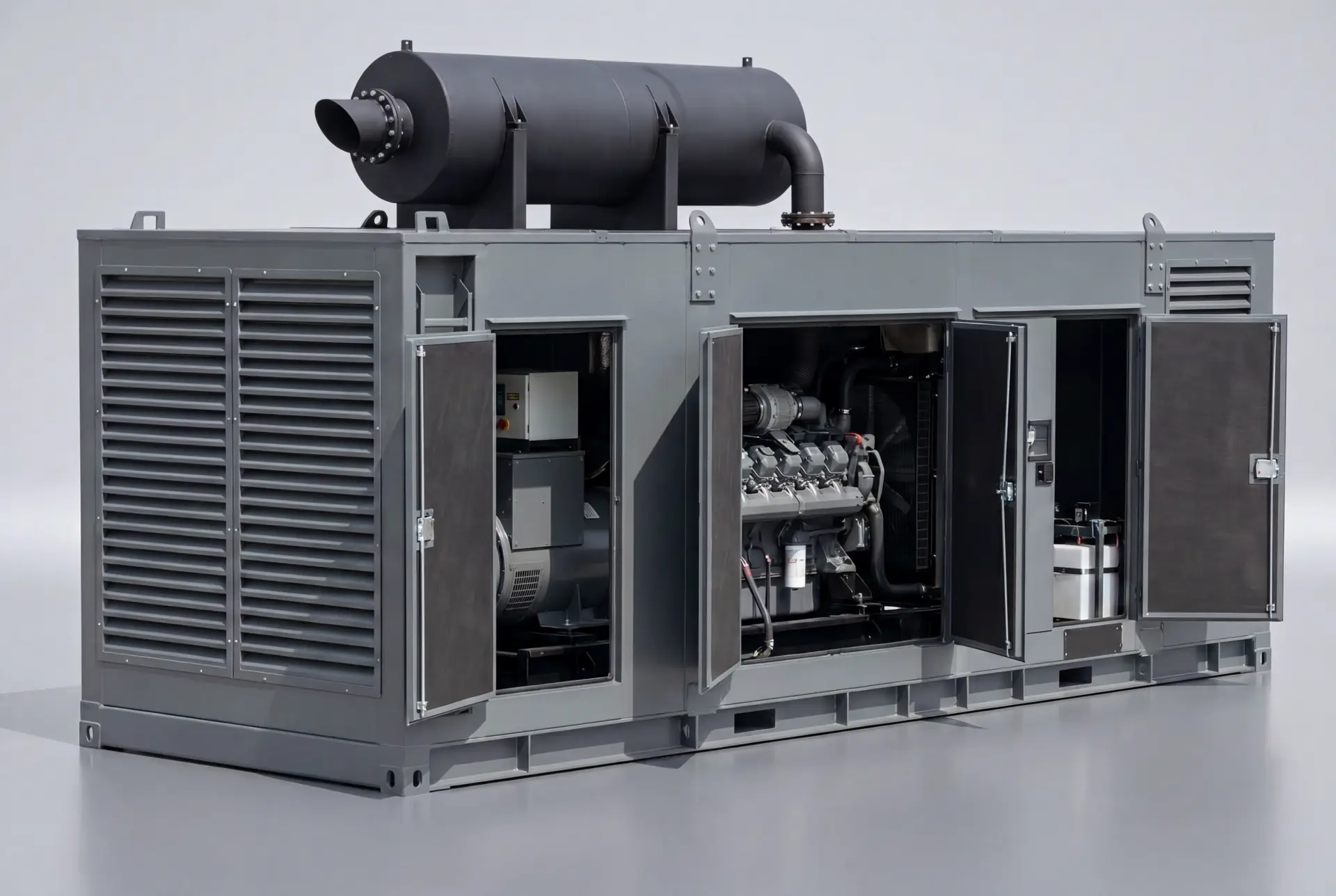
The same diesel generator means five different systems in five different sectors.
A standby generator in a data center and an emergency power system on an offshore platform may look similar as equipment, but their engineering requirements are entirely different. A data center needs block load capability, the right Tier level and runtime matched to fuel storage. Oil and gas projects call for ATEX/IECEx, harsh-environment and custom design. Healthcare facilities require NFPA 99/110 Type 1 and start-up within 10 seconds. We design around the real requirements of each sector — not with a generic “catalog solution”.
Data Centers
Tier III/IV compliance, hyperscale density and AI/HPC loads. Block load capability (>50% steps), N+1/2N redundancy, runtime matched to fuel storage and hot/cold aisle coordination.
- NFPA 110
- Uptime Tier
- ASHRAE TC 9.9
Oil and Gas
Refinery emergency power, offshore/FPSO and onshore drilling. Hazardous area classification, harsh-environment derating and project-specific design, particularly for MENA and Central Asia projects.
- IEC 60079
- API RP 14F
- NORSOK
Healthcare
Life-safety-focused NFPA 99/110 Type 1 emergency power systems with start-up within 10 seconds. Life safety and critical branches, parallel operation for redundancy and JCI compliance.
- NFPA 99/110
- JCI
- IEC 60601
Industry and Mining
Standby and prime power, peak shaving, heavy motor starting and VFD harmonics. For mining sites: remote locations, altitude derating and dusty conditions.
- IEEE 519
- NEMA MG-1
- ISO 8528
Commercial Buildings
24/7 operation where uninterrupted power is critical to reputation. Life safety (emergency lighting, fire pumps, smoke extraction) and comfort continuity together; variable load profiles and urban acoustics.
- ISO 8528
- NFPA 101/110
Other Critical Facilities
For projects outside the categories above where power supply directly affects operations — such as laboratories, defense facilities and critical infrastructure — we carry out a project-based assessment.
Tell us about your project
Comparison
Typical requirements by sector
| Aspect | Data Center | Oil and Gas | Healthcare | Industrial | Commercial |
|---|---|---|---|---|---|
| Operating mode | Standby + occasional prime | Emergency + continuous (critical parts) | Standby (life safety) | Prime + peak shaving | Standby + frequent operation |
| Start-up time | <10 s (Tier III/IV) | <10–15 s | <10 s (NFPA 110 Type 1) | Flexible | <15 s |
| Typical unit rating | 1.5–3 MW × N+1 | 0.5–2 MW (Ex zone), 5+ MW (process) | 0.5–2 MW × 2 | 1–5 MW prime | 500 kW – 3 MW |
| Key standards | NFPA 110, Uptime Tier, ASHRAE TC 9.9 | API RP 14F, IEC 60079, NORSOK | NFPA 99/110, JCI, IEC 60601 | IEEE 519, NEMA MG-1 | ISO 8528, NFPA 101/110 |
| Fuel strategy | 24–72 h runtime tank | Project-specific; secondary containment critical | 96 h and above | Variable; bulk storage for prime | Site-specific (urban) |
| Acoustic sensitivity | High (urban sites) | Low (remote sites) | High (in-hospital) | Medium | High (urban, nighttime) |
| Key HSE topics | Arc flash, hot aisle ergonomics | ATEX, gas detection, fire and rescue | Infection control, fire compartmentation | Machine safety, LOTO | Life safety, fire and evacuation |
Values show typical ranges; every project is assessed separately against its own site conditions and regulations.

Get technical advice and a quote for your project
Share your site conditions and requirements, and our engineering team will work with you to define the right solution.

Get in Touch

2DE Enerji Mühendislik Taahhüt Ltd. Şti.